
Showing posts with label Electronics section. Show all posts
Showing posts with label Electronics section. Show all posts
Monday, 25 July 2016
What is Logic Gate?
Basically a logic gate is an electronic gate which uses logic for its working. Below are the logic gates with their truth tables.

Monday, 11 May 2015
What is Bipolar Junction Transistor(BJT)?
The Bipolar
Junction Transistor:
The bipolar junction transistor consists of three regions of semiconductor material. One type is called a p-n-p transistor, in which two regions of p-type material sandwich a very thin layer of n-type material. A second type is called an n-p-n transistor, in which two regions of n-type material sandwich a very thin layer of p-type material. Both of these types of transistors consist of two
Tuesday, 5 May 2015
What is electroplating and explain Polarization?
Electroplating:
Electroplating uses the principle of electrolysis to apply a thin coat of one metal to another metal. Some practical applications include the tinplating of steel, silver-plating of nickel alloys and chromium-plating of steel. If two copper electrodes connected to a battery are placed in a beaker containing copper sulphate as the electrolyte it is found that the cathode (i.e. the electrode connected to the negative terminal of the battery) gains copper
Electroplating uses the principle of electrolysis to apply a thin coat of one metal to another metal. Some practical applications include the tinplating of steel, silver-plating of nickel alloys and chromium-plating of steel. If two copper electrodes connected to a battery are placed in a beaker containing copper sulphate as the electrolyte it is found that the cathode (i.e. the electrode connected to the negative terminal of the battery) gains copper
Define Doping & Explanation of P-Type and N-Type Materials?


N-type and P-type
Materials:
Adding extremely small amounts of impurities to pure semiconductors in a controlled manner is called doping. Antimony, arsenic and phosphorus are called n-type impurities and form an n-type material when any of these impurities are added to silicon or germanium. The amount of impurity added usually varies from 1 part impurity in 105 parts semiconductor material to 1 part impurity to 108 parts semiconductor material, depending on the resistivity required. Indium, aluminium and boron are called p-type impurities and form a p-type material when any of these impurities are added to a semiconductor.
Monday, 4 May 2015
What are SI units and Explain about prefixes?
SI units:

The system of units used in engineering and science is the Systeme Inter-`nationale d’Unites (International system of units), usually abbreviated to SI units, and is based on the metric system. This was introduced in 1960 and is now adopted by the majority of countries as the official system of measurement.
The basic units in the SI system are listed with their symbols, in
Table below:
Sunday, 3 May 2015
What is Zener Diode?
Zener Diode:

A Zener diode is a diode which allows current to flow in the forward direction in the same manner as an ideal diode, but will also permit it to flow in the reverse direction when the voltage is above a certain value known as the breakdown voltage, "zener knee voltage" or "zener voltage" or "Avalanche point".

A Zener diode is a diode which allows current to flow in the forward direction in the same manner as an ideal diode, but will also permit it to flow in the reverse direction when the voltage is above a certain value known as the breakdown voltage, "zener knee voltage" or "zener voltage" or "Avalanche point".
What is Transistor?
Transistor:

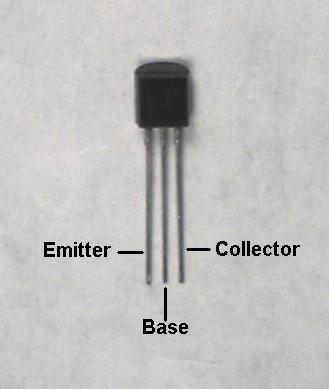
A transistor is a semiconductor device used to amplify and switch electronic signals and electrical power. It is composed of semiconductor material with at least three terminals for connection to an external circuit.
Monday, 20 April 2015
What is Diode?

Do you want to land job in Europe🇩🇪, US🇺🇲, UK🇬🇧, UAE🇦🇪? We'll help you with Job Placement and Visa Process. Just start AIOps course, complete it with all requirements, pass your exams and get a bachelor's degree equivalent Diploma and Al Nafi will place you on job in G20 countries.🌎
A diode is basically a semiconductor device Artificial Intelligence by Al Nafithat allows the current to flow in one direction only. A diode is a specialized electronic component with two electrodes called the anode and the cathode.
Sunday, 19 April 2015
What is Resistor?
 It is simply a device having resistance to the passage of an electric current.. Resistors can be used to provide a specific voltage for an active device such as a transistor.
Subscribe to:
Posts (Atom)